



Tigray Region
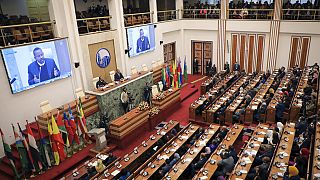
Ethiopia's Prime Minister Abiy Ahmed on Tuesday spoke for the first time publicly about the possibility of peace negotiations with Tigrayan rebels, who have been locked in a 19-month war with federal forces.
Dispelling speculation that secret talks were already under way with the Tigray People's Liberation Front (TPLF), Abiy said his government had instituted a committee to examine the possibility of holding negotiations.
"It is not so simple to conduct negotiations. There is a lot of work to be done (before) and a committee has been set up" to look into the issue, Abiy told Ethiopian MPs.
The committee will be headed by Deputy Prime Minister Demeke Mekonen, who also serves as foreign minister, and will draft a report detailing the preconditions for negotiations, he said.
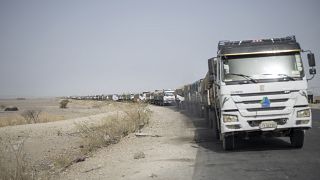
The comments follow the government's declaration of an "indefinite humanitarian truce" in March, paving the way for humanitarian aid to reach the northernmost region of Tigray for the first time since mid-December.
The conflict has driven hundreds of thousands of people to the brink of famine, displaced more than two million and left more than nine million in need of food aid, according to the United Nations.
"Peace isn't something you hide," Abiy told lawmakers in response to rumoured talks with the rebels.
"We are saying we want peace; doesn't mean we are going to do secret negotiations. Secret negotiations have no substance," he added.
- 'Non-negotiable' -
The thorny question of western Tigray -- a contested region claimed by both Amharas and Tigrayans -- is among the issues expected to come up in any negotiations.
The TPLF has repeatedly said that western Tigray, which has been occupied by Amhara forces since the war erupted in November 2020, is a "non-negotiable" part of Tigray.
"Any lasting solution of the current crisis must be predicated on the re-establishment of the prewar status quo ante," the TPLF said last week, calling for "the complete and verified withdrawal of all invading forces from every square inch of Tigrayan territory".
The TPLF has already asked the UN Security Council to ensure the withdrawal of Amhara forces and Eritrean troops from the region.
The conflict began in November 2020 when the government sent federal troops into Tigray to topple the TPLF, the region's former ruling party, saying it was in response to rebel attacks on army camps.
After the TPLF mounted a shock comeback in June, retaking Tigray and then expanding into the neighbouring regions of Afar and Amhara, fighting intensified in the second half of 2021, before reaching a stalemate.
Accounts have emerged of mass rapes and massacres during the conflict, with both sides accused of human rights violations.
00:21
Thousands flee South as fighting intensifies days after DRC and Rwanda recommit to peace deal
00:55
Rwanda signs $228 agreement with US under Washington's new aid model
02:21
Trump praises leaders of Rwanda and DR Congo as they sign a peace deal
02:00
UN says food distribution in Sudan improving but areas remain cut off
01:37
UN deputy chief says conflict and violence are the main drivers of food insecurity
02:24
UN orders probe into alleged atrocities in Sudanese city of Al-Fashir